Most small and medium businesses do not need an "AI strategy" in the abstract. They need fewer hours lost to repetitive work, faster answers for customers and better use of the documents and data they already have. That is where AI for small businesses becomes useful: not as a showpiece, but as a tool inside a process. This guide to AI integration for SMEs covers what is realistic, the use cases that tend to pay back, how costs behave, what GDPR and the EU AI Act mean for you in plain terms, and how to start small without betting the company.
Where SMEs stand today
Adoption is real but still uneven. According to Eurostat, in 2025 about 19.95% of EU enterprises with ten or more employees used at least one AI technology. The share was 17% for small enterprises, 30.36% for medium ones and 55.03% for large ones. Among enterprises that used AI, marketing or sales (34.70%) and the organisation of business administration or management (31.05%) were the most common application areas; logistics was the least (6.08%).
Two things follow. Most small companies have not started, so you are not late. And the common uses are unglamorous: marketing, sales and administration. That matches our experience: the best first projects are boring and measurable.
Use cases that tend to pay back
Choose problems with a clear owner, a repeatable task and a result you can check.
| Area | Example | What AI does | Check |
|---|---|---|---|
| Customer support | Answering common questions from your own documentation | Drafts or gives answers from approved sources, with citations | Wrong-answer rate, escalations |
| Sales and marketing | Product descriptions, email drafts, lead qualification | Generates first drafts that a person reviews | Time saved, conversion quality |
| Administration | Invoices, forms, contracts, emails | Extracts fields, classifies, summarises | Error rate vs manual |
| Knowledge search | Internal documents, manuals, policies | Finds and summarises relevant passages | Correct source cited |
| Training and education | Feedback on written or spoken answers | Gives structured feedback quickly | Agreement with human assessors |
| Forecasting and planning | Demand, stock, scheduling | Predicts from your historical data | Forecast accuracy vs current method |
Real examples from our work illustrate the pattern:
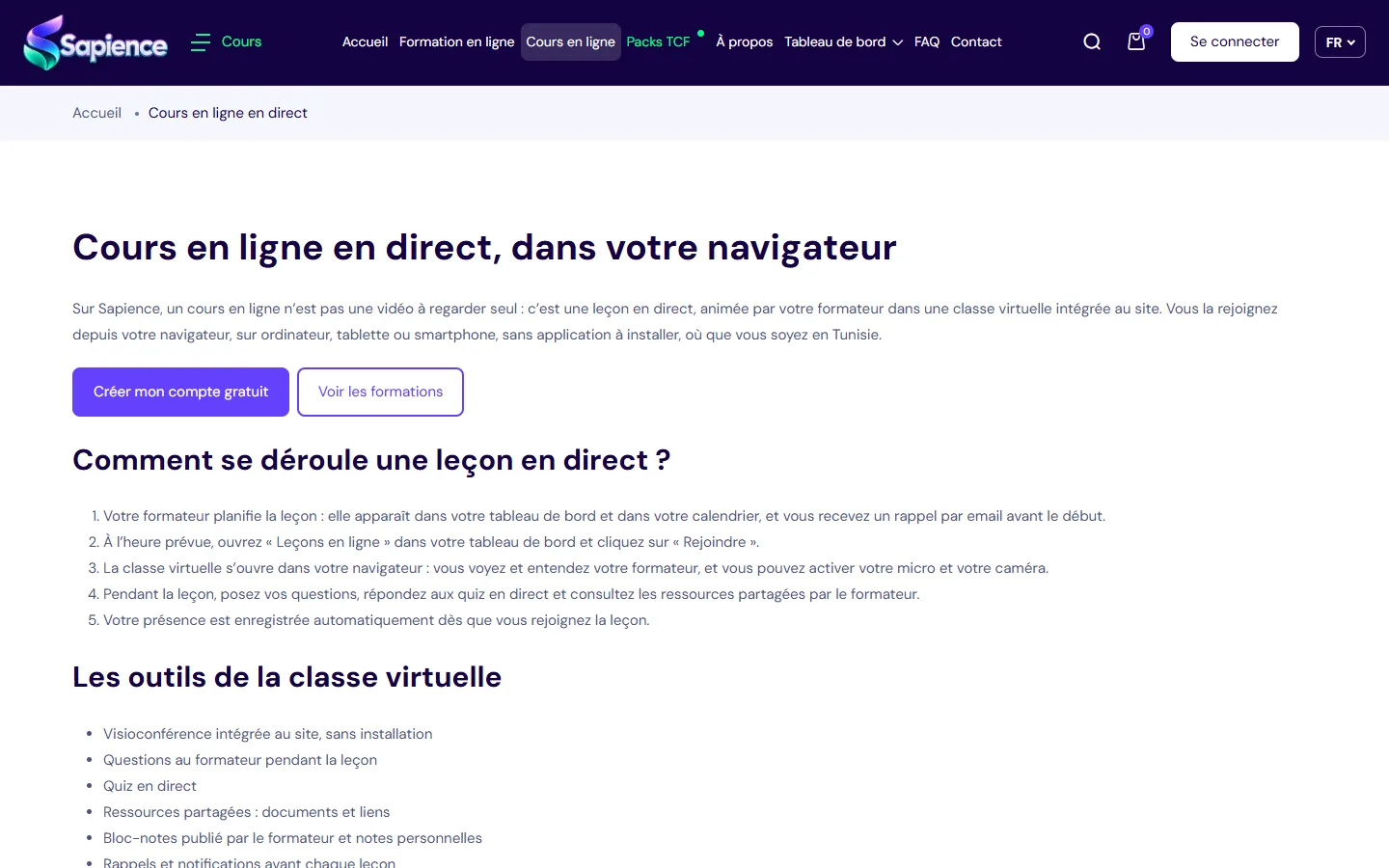
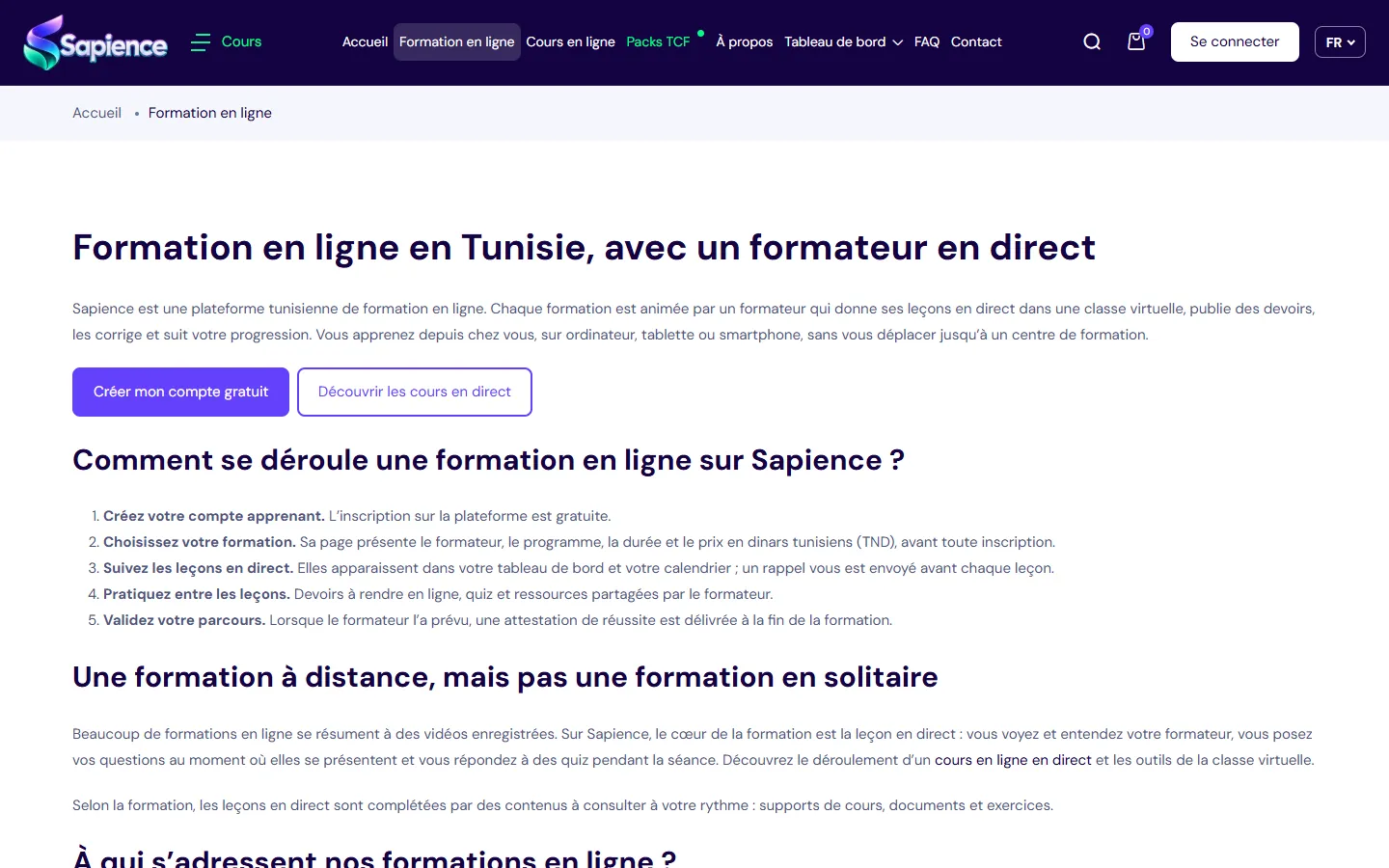
- Sapience, an online-learning platform with TCF exam preparation, uses speech-to-text (Whisper) and a language model to correct written and spoken answers in about three seconds. The AI supports a clear task (correction) inside a platform learners already use.
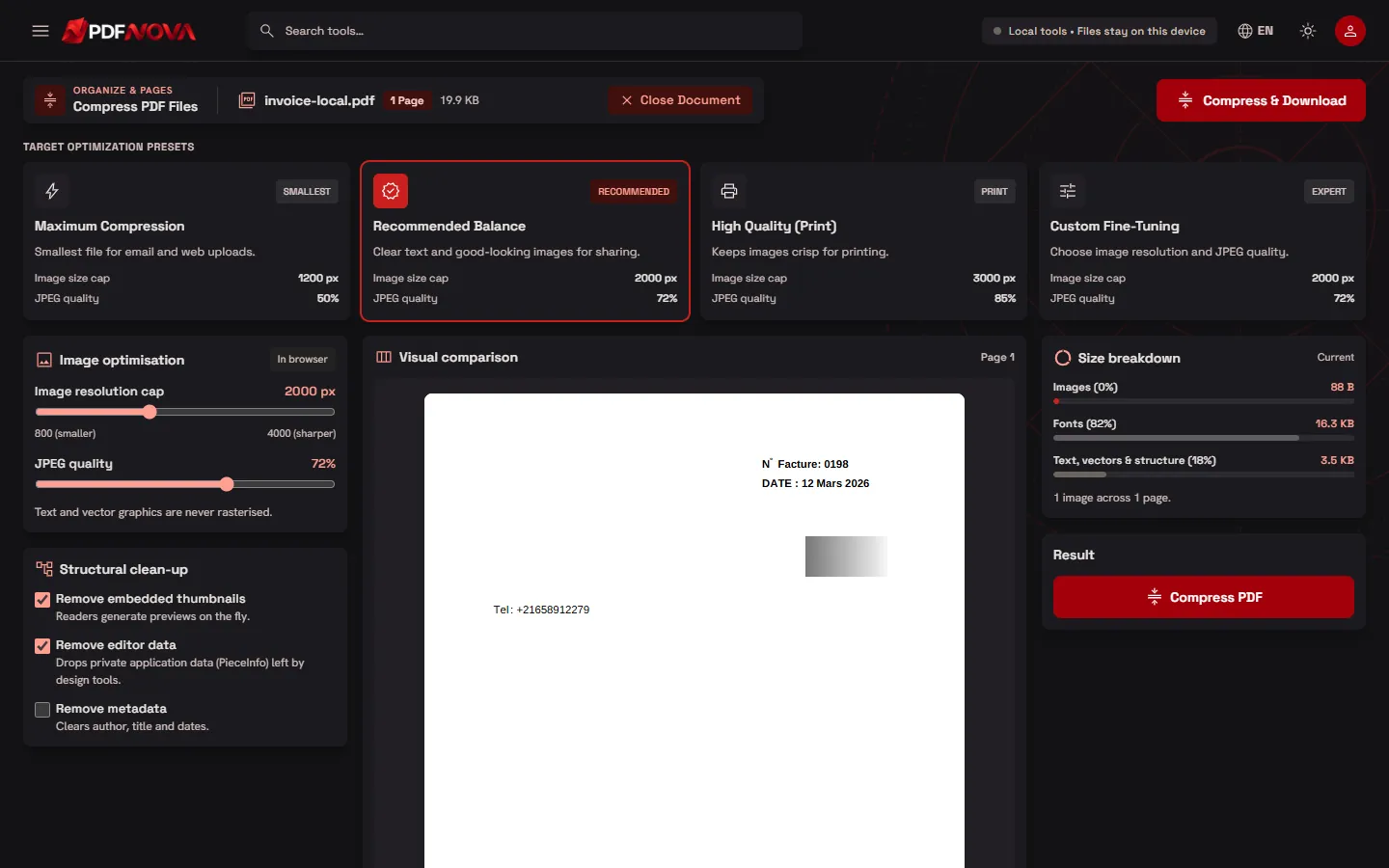
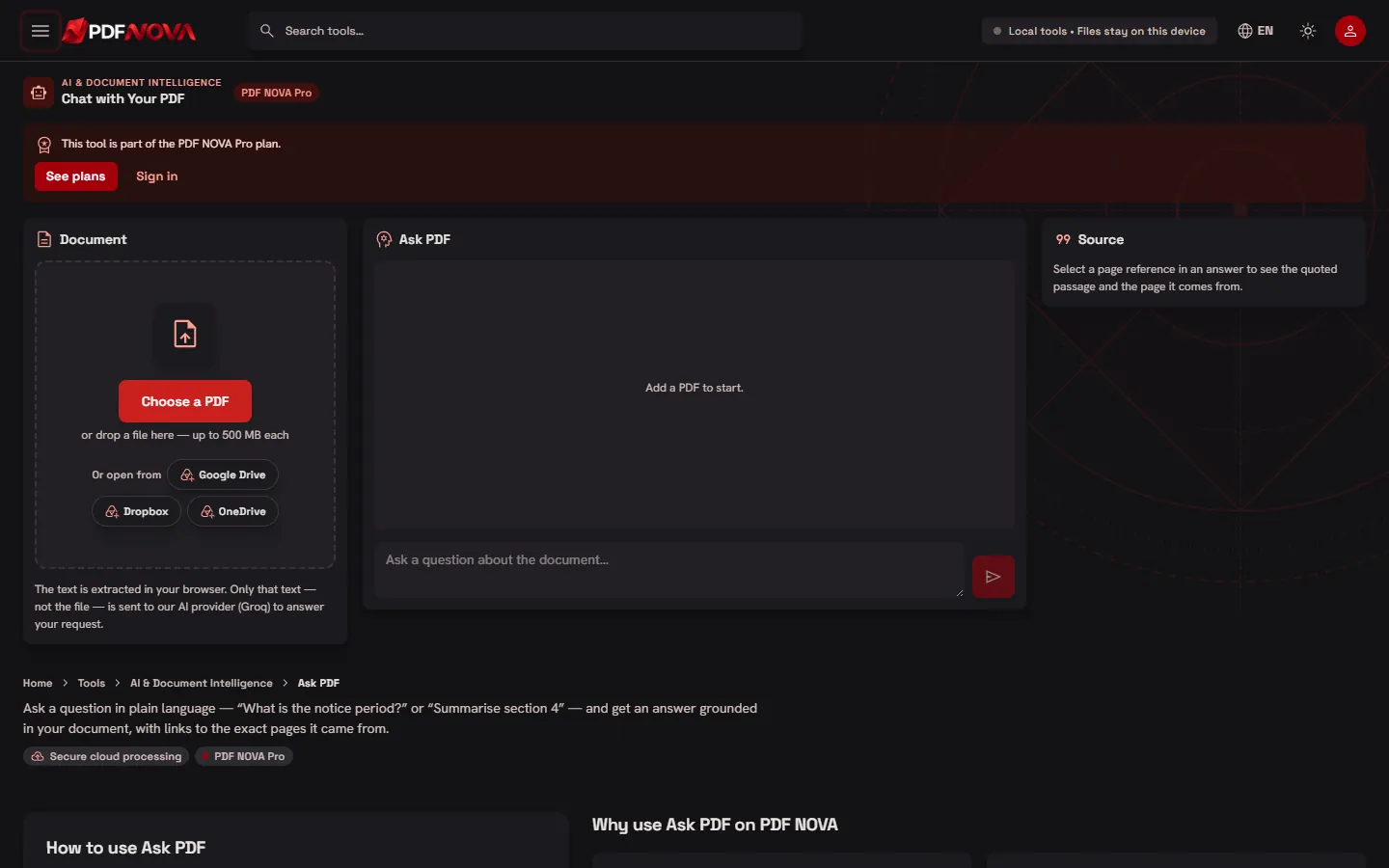
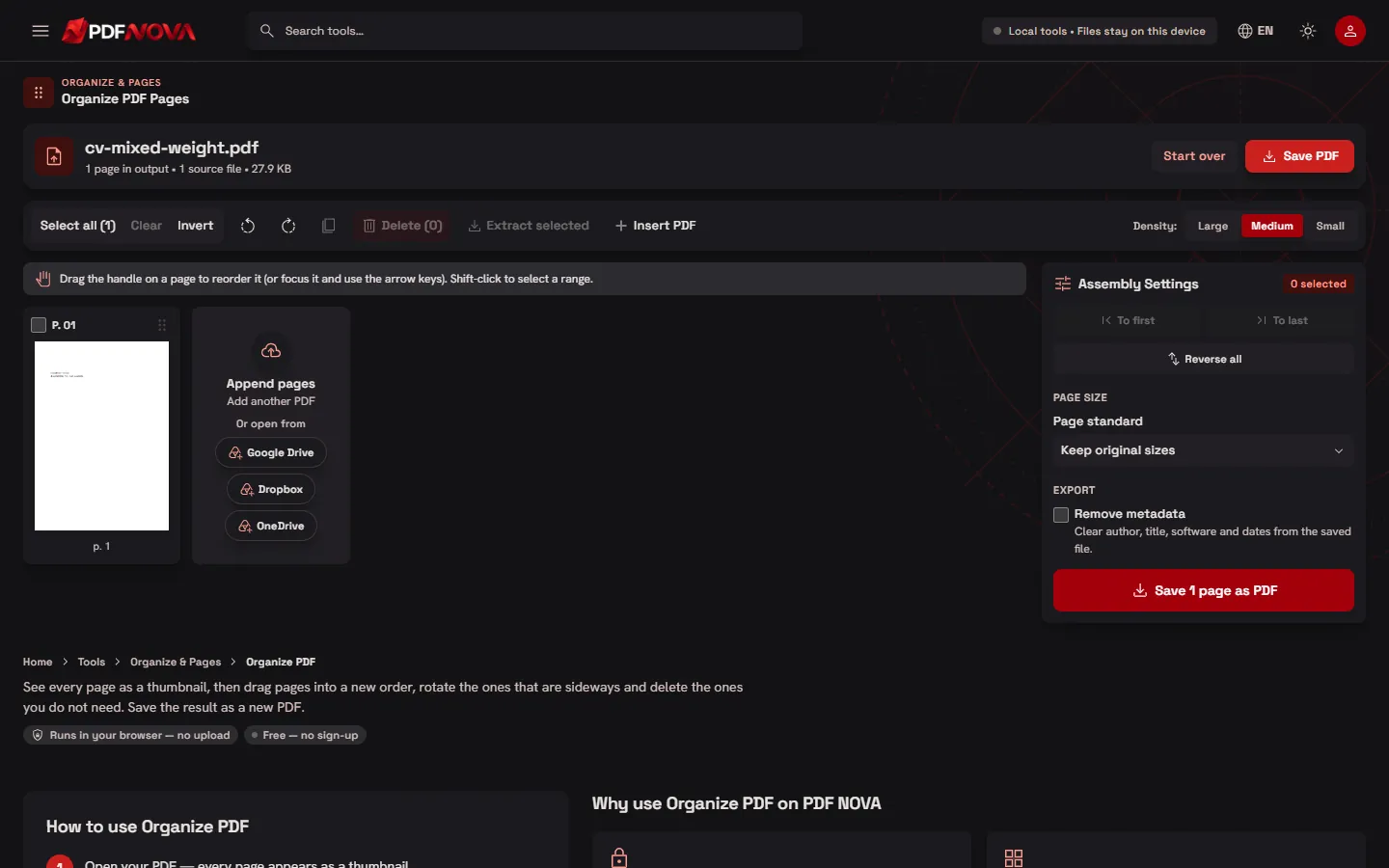
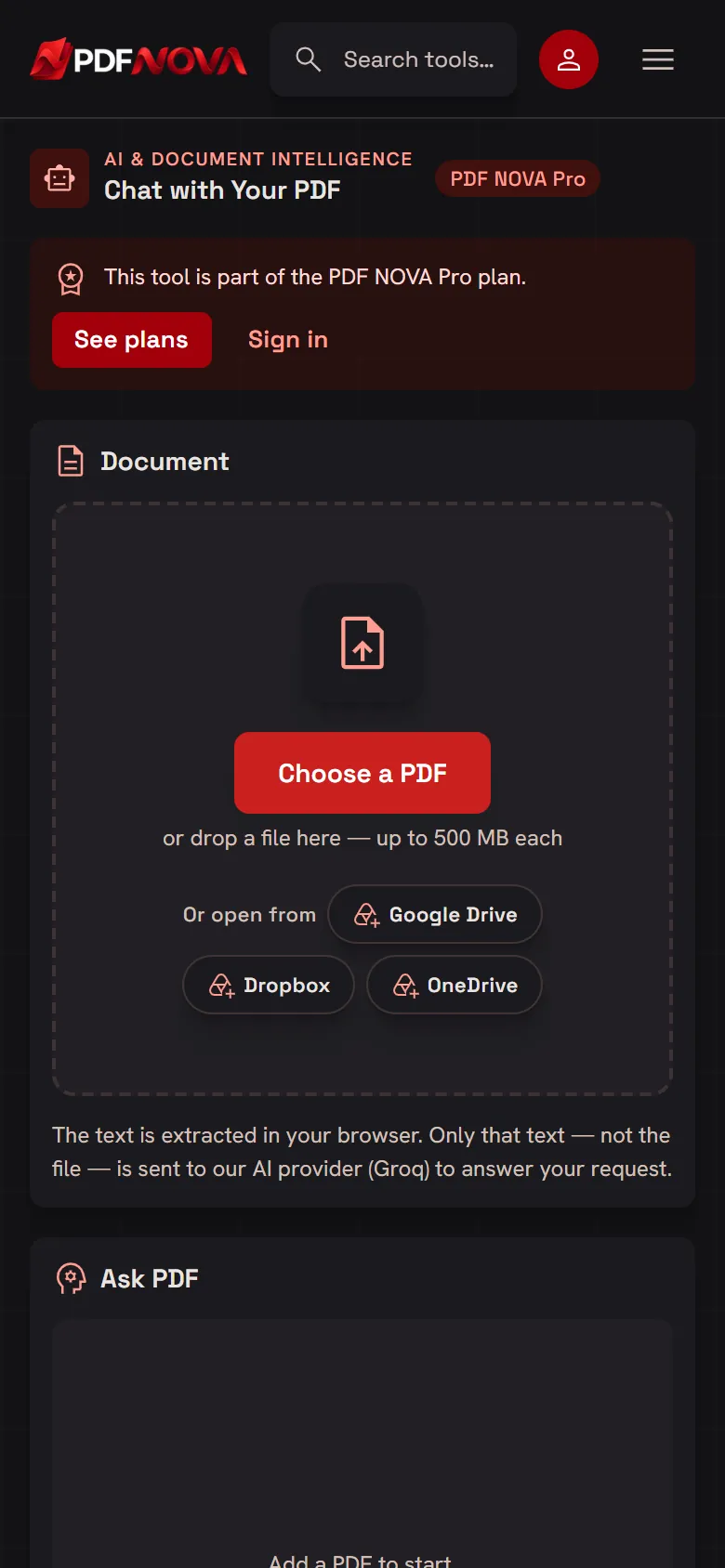
- PDF Nova offers AI answers with page citations on the server, while its core PDF tools run in the browser so that files are never uploaded. Citations make answers checkable, which matters more than eloquence.
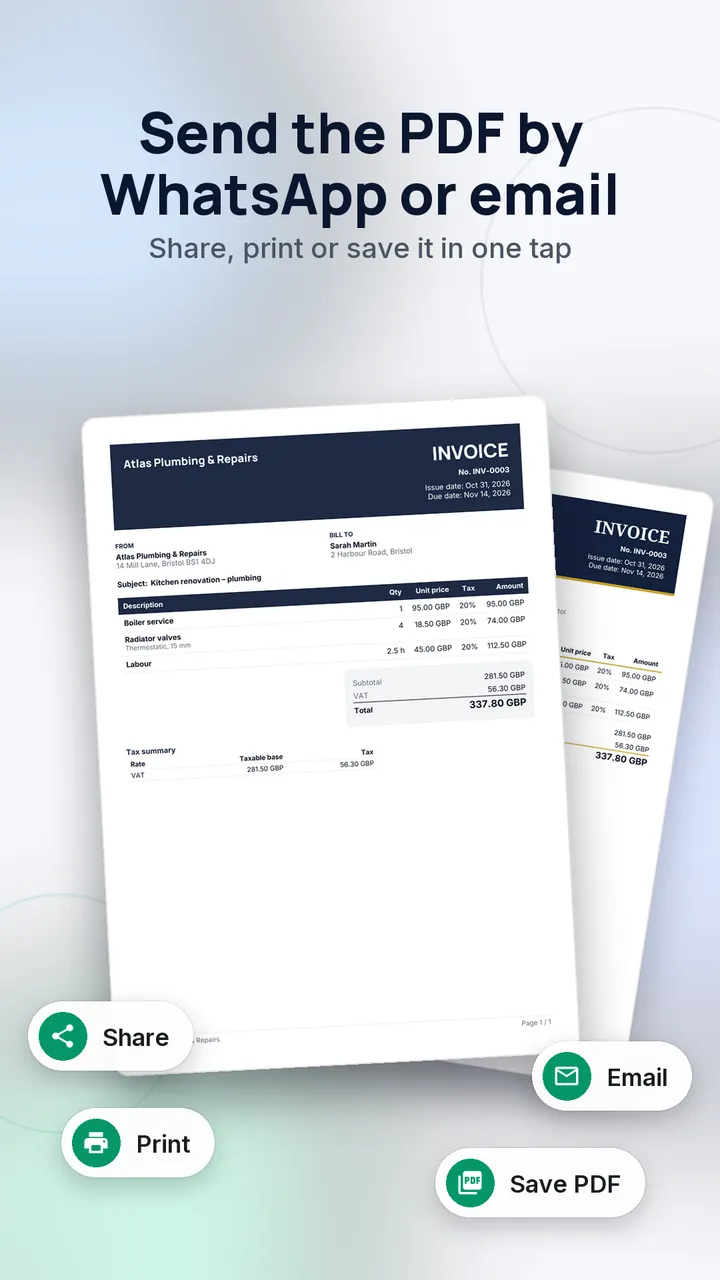
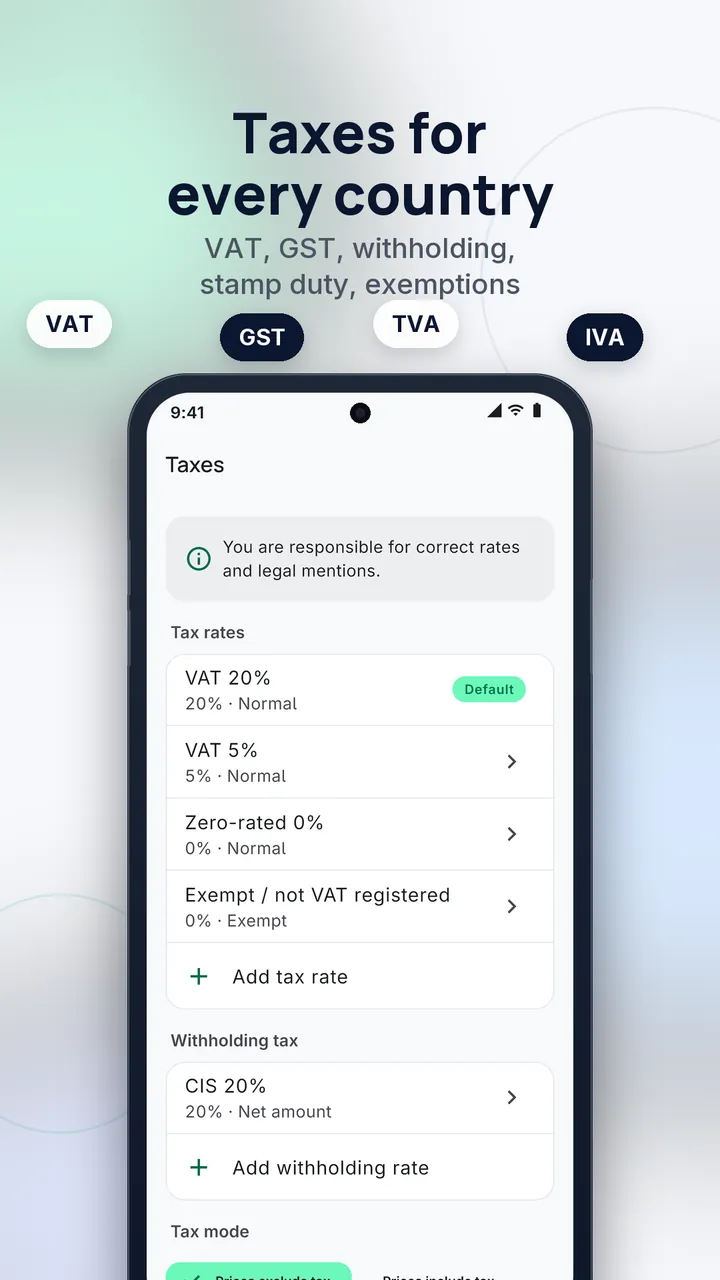
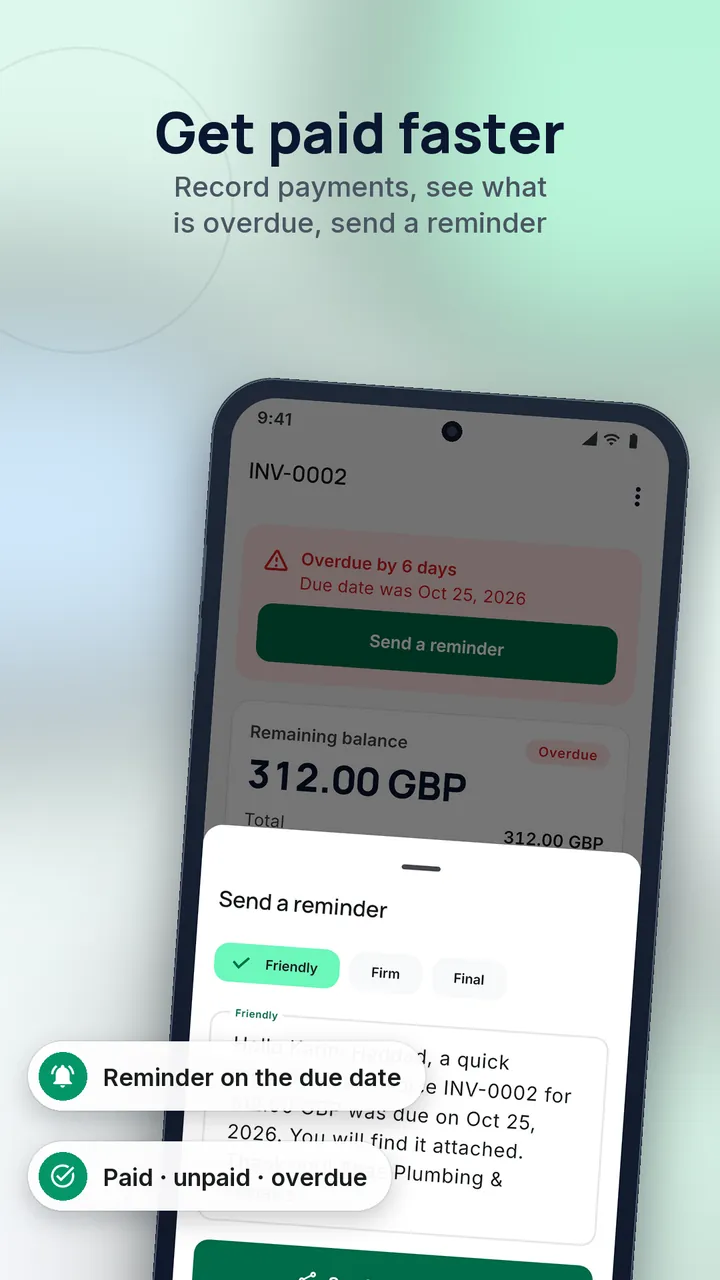
- Cachet, an offline invoicing app, shows the opposite lesson: not every product needs AI. It was built on tested, deterministic logic (729 automated tests) because invoices must be exact, and that is a good rule of thumb for anything involving money.
The question is not "where can we use AI?" but "which step in this process is slow, repetitive and tolerant of a reviewed draft?"
What it costs
We will not quote euro figures here, because AI projects vary too much and we have no neutral source for a representative price. It is more useful to understand how the cost is built:
- Discovery and scoping. Defining the task, the data, the success measure and the risks. Small but decisive.
- Data preparation. Often the largest hidden cost. Documents must be cleaned, structured and access-controlled before an assistant can use them.
- Build and integration. Connecting the model to your tools (CRM, helpdesk, accounting, website) and building the interface.
- Usage costs. Most AI services charge by usage, for example per token or per request. Costs scale with volume, so estimate your expected volume and ask providers for price per unit.
- Evaluation and monitoring. Test sets, review processes and logs. Skipping this is how pilots fail quietly.
- Maintenance. Models, APIs and prompts change; your documents change; users find edge cases.
Ready-made AI features inside software you already pay for are usually the cheapest first step. Custom AI integration makes sense when the value lies in your own data or process, or when no product fits. Our AI software development service covers that second case.
Data protection and GDPR
If AI touches personal data, the GDPR applies exactly as it does to any other processing. The European Commission explains the basics for businesses in its data protection overview, including lawful grounds for processing. Practical questions to answer before you start:
- What personal data goes into the system? Can you avoid it, remove it or pseudonymise it first?
- What is your lawful basis and have you told people (privacy notice) that automated tools are involved?
- Who is the processor? If you send data to an AI provider, you need a data processing agreement and should understand where data is stored and whether it is used to train models.
- Retention. How long are prompts, files and outputs kept, and who can see them?
- Transfers outside the EU. Check where the provider processes data and which safeguards apply.
- Security and access. Limit who can query which documents.
- Risk assessment. For higher-risk processing, such as profiling or large volumes of sensitive data, seek advice on whether a data protection impact assessment is needed.
An architectural choice can reduce risk considerably. Processing locally, in the browser or on your own infrastructure, means less data leaves your control. PDF Nova follows this idea for its core tools. Where cloud models are necessary, minimise the data you send. This is general guidance, not legal advice: involve your data protection officer or a lawyer for specific cases.
The EU AI Act in plain terms
The EU AI Act is a risk-based regulation. It entered into force on 1 August 2024 and applies in stages. As summarised by the European Commission (read in November 2026):
- Unacceptable risk: banned. Practices such as social scoring and emotion recognition in workplaces and schools. Most prohibitions applied from 2 February 2025.
- High risk: strict obligations. Examples include CV-sorting in recruitment, credit scoring and exam scoring. Obligations include risk management, data quality, logging, documentation and human oversight. According to the Commission's page, these rules were postponed by the AI Omnibus to 2 December 2027 for the main high-risk use cases and 2 August 2028 for AI embedded in regulated products. Dates can change, so verify them before relying on them.
- Transparency risk. People must be told when they interact with AI, such as a chatbot, and AI-generated content such as deepfakes must be identifiable or labelled. These rules apply from August 2026, so they already matter if you deploy a customer-facing chatbot.
- Minimal risk. No specific obligations. The Commission notes this covers most AI in use today, such as spam filters.
Another obligation that reaches ordinary businesses: AI literacy obligations have applied since 2 February 2025, according to the same source. In practice, make sure the people who use AI tools at work understand what they can and cannot do.
What this means for an SME:
- Most everyday uses (drafting, summarising, search, support assistants) are minimal or limited risk.
- If you build a customer chatbot, tell users it is an AI.
- If you use AI for decisions about people, such as hiring, credit or assessment, treat it as potentially high risk and get proper advice before deploying.
- Keep a simple register of the AI tools you use, their purpose and the data involved. It helps with both the AI Act and GDPR.
How to start small
A good first project has a narrow scope, a human in the loop, a measurable result and a short timeline. A sensible path:
- Pick one process. Something that costs real time and has an obvious owner.
- Measure the baseline. How long does it take today? How many errors?
- Define "good enough". For example, 90% of drafts accepted with minor edits. Decide this before you build.
- Use your own approved sources. Retrieval from your documents with visible citations beats free-form generation.
- Keep a person in the loop. At first, AI drafts and a human approves.
- Build a test set. Twenty to fifty real examples are enough to catch the obvious failures.
- Run a time-boxed pilot with a small group, then review the numbers.
- Decide to scale, change or stop. Stopping is a legitimate result.
Avoid the common traps: starting with the technology instead of the problem, feeding in confidential data without checking terms, trusting outputs without evaluation, and building a chatbot that cannot say "I don't know".
Build, buy or combine
- Buy when a mature product already solves the problem and your data is not unusual.
- Configure existing tools with your content when they are close but need adapting.
- Build when AI must be woven into your own application, data or workflow, or when privacy requires a specific architecture. This often means adding intelligence to a web application or an internal system rather than creating a stand-alone AI product.
- Combine a stable core application with AI features that can be swapped as models change.
Frequently asked questions
Do I need a lot of data to use AI?
Not for most business tasks. Modern language models work from your documents and instructions without training a model from scratch. Quality of data matters more than quantity.
Is it safe to put customer data into an AI tool?
It depends on the provider, the contract and the data. Check the data processing terms, storage location, retention and whether inputs are used for training. Avoid sending personal data when you can.
Does the EU AI Act apply to small companies?
It applies to providers and deployers of AI systems in scope, regardless of size, though the obligations depend on the risk category. For most SMEs using low-risk tools, the main points are transparency, AI literacy and avoiding prohibited or high-risk uses without preparation.
How long does a first pilot take?
A focused pilot can often be scoped in days and run in weeks, depending on the data and integrations. The preparation of data is usually the slowest part.
Will AI replace my staff?
In small businesses, the realistic goal is to remove repetitive work so that people can spend time on customers and judgement. Plan changes openly with your team.
Conclusion
AI for SMEs works best as a series of small, measured, well-governed improvements: one process, one owner, one success metric, a human reviewing the output. Respect GDPR from the first design decision, understand the transparency and literacy duties in the EU AI Act, and keep high-stakes decisions about people out of automation until you have proper advice.
If you have a candidate process in mind, contact us and we will help you assess whether AI is the right tool and how to pilot it safely.