Ask five providers what a business website costs and you will get five answers, from a few hundred pounds to six figures. That is not evasion: "a website" covers anything from a four-page brochure to a multilingual platform with bookings and payments. This guide explains the realistic price ranges for 2025–2026, what actually moves the number, how freelancers, agencies and DIY builders compare, and how to build a budget you can defend.
A caution on the numbers: most public price guides are published by vendors who sell websites, so they lean towards their own pricing. We cite sources and treat every range as a starting point for quotes, not a promise.
What the market says: typical price ranges
Published guides cluster around a few bands. As of 2025–2026:
- DIY site builders: Wix's plans and Squarespace's plans start at roughly $16–$29 a month on annual billing for entry and mid-tier plans, rising for online-store tiers. Prices change often, so check the provider's own page before budgeting.
- Freelancers: buyer guides typically quote from a few hundred to around $5,000 for a small business site. Fiverr's pricing guide is a useful reference for what marketplace designers charge, bearing in mind that Fiverr has an interest in that market.
- Agencies: WebFX publishes ranges that start in the low thousands for a simple site and climb well beyond $10,000 for larger or more complex builds. Several guides cite Clutch survey data suggesting a median small-business spend of around $5,000 on a new site, with firms working with a professional team spending considerably more. Treat these as indicative.
The honest summary: a simple, professionally built site is a low-to-mid four-figure project, a site with real functionality is a mid-to-high four or low five-figure project, and anything bespoke (custom logic, integrations, user accounts) is a software project priced like one.
What drives the cost
Price follows effort, and effort follows scope. The factors that matter most:
Number and type of pages
A one-page site and a 40-page catalogue are different jobs. Templated pages (services, team, FAQ) are cheap; unique layouts, rich case studies and long-form content are not.
Design: template, customised or bespoke
Starting from a theme and adapting it to your brand is the economical route. A fully bespoke design, with research, wireframes and custom illustration, can double the design effort. It pays off when the brand is a competitive advantage, less so for a local service business.
Content
Someone has to write the copy, source photography and translate it. Many projects slip because content arrives late. If you need professional copywriting, photography or several languages, budget for it separately from development; multilingual sites multiply content and testing effort.
Functionality
Contact forms are trivial. Booking engines, member areas, payments, CRM integration, search, calculators and dashboards each add days or weeks. If your site needs to do things rather than show things, you are closer to a web application than a brochure; our web application development page shows how that scoping differs.
E-commerce
Product catalogues, variants, tax rules, shipping, payment providers and stock sync make an online store materially more expensive than a brochure site. Our e-commerce development page explains the typical building blocks.
Performance, accessibility and SEO foundations
These are cheap to include at the start and expensive to retrofit. Fast loading, semantic markup, keyboard navigation and sensible metadata should be part of the build, not an upsell. In Europe accessibility is also becoming a legal matter: the European Accessibility Act applies to many consumer-facing digital services, so ask any provider how they test for it.
Integrations and migration
Moving an existing site to a new platform, redirecting old URLs, importing products or connecting accounting and marketing tools are common hidden costs. For example, Hanoon Labs migrated a German drinks-delivery shop from Shopware 5 to WooCommerce (812 products). The platform change was only part of the job; the rest was data, redirects and performance tuning.
Freelancer vs agency vs DIY builder
| DIY builder | Freelancer | Agency / studio | |
|---|---|---|---|
| Typical upfront cost | Low (subscription plus your time) | Low to mid | Mid to high |
| Speed | Fast for simple sites | Medium | Medium to slow (process, handovers) |
| Customisation | Limited to the platform | High, depends on the person | High |
| Breadth of skills | You supply them | One person's range | Design, development, QA, project management |
| Continuity risk | Platform lock-in | Single point of failure | Lower, depends on contract |
| Best for | Tests, very small businesses, tight budgets | Well-defined small projects | Complex scope, long-term partnership |
None of these is "best". A sole trader with a five-page site is well served by a builder; a company with integrations and compliance needs usually is not. A good freelancer or small studio often sits in the sweet spot: senior attention without agency overhead. Hanoon Labs is a small, remote software engineering studio, so we fall into that last group, but the same questions apply to anyone you hire.
Example budgets and their assumptions
These are illustrative scenarios, not quotes. Real figures depend on your market, the provider and the exact scope. Use the ranges above as the anchor.
Scenario A: local service business brochure site. Assumptions: 5–7 pages, adapted template, your own text and photos, contact form, basic SEO setup, one language. Reasonable routes: a builder subscription (low hundreds per year) or a freelancer at the lower end of the ranges above. The main risk is not price but outdated content.
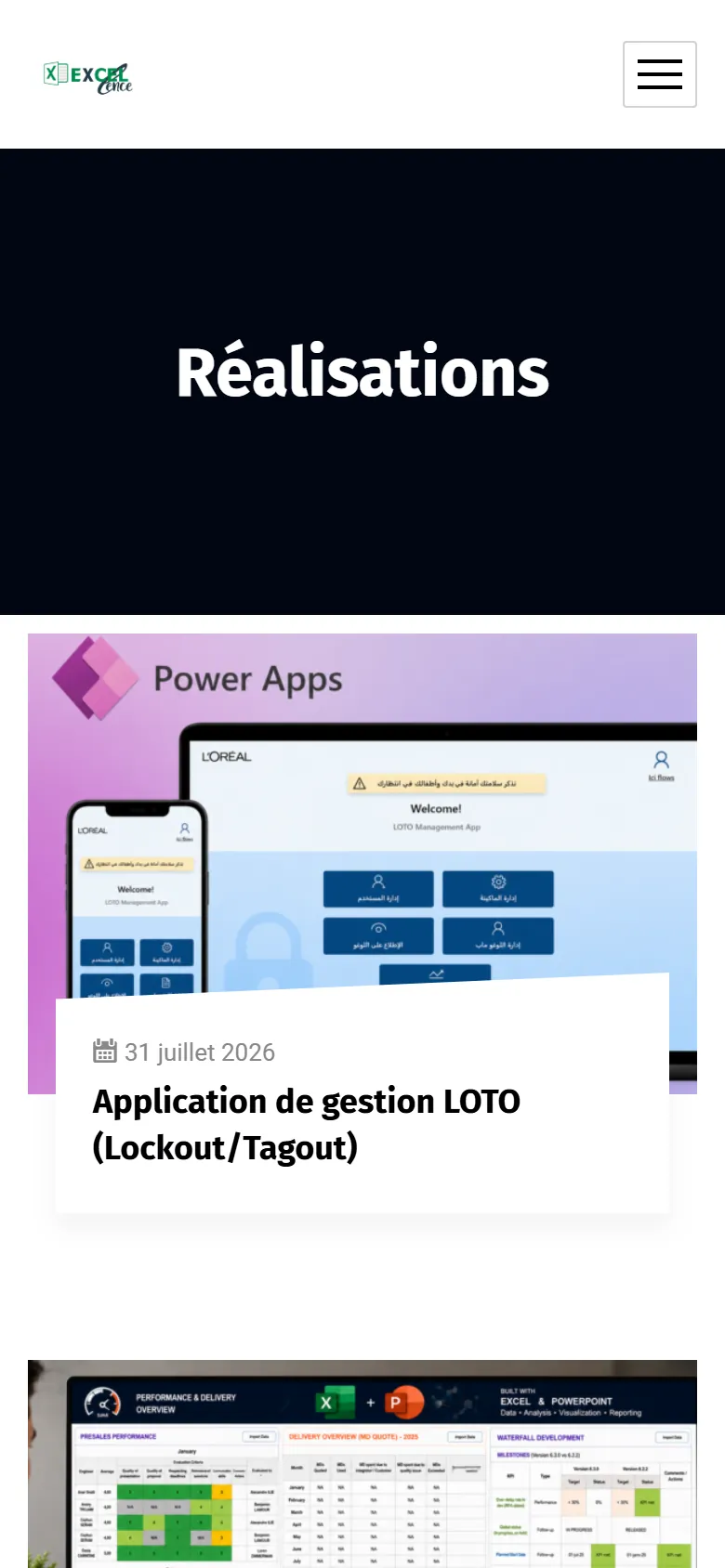
Scenario B: professional services firm. Assumptions: 10–20 pages, custom design on a CMS such as WordPress, blog, case studies, analytics, two languages, GDPR-compliant consent handling. This typically sits in the middle of the freelancer and agency ranges. The website of an Excel VBA and Power Platform consultancy is this kind of content-led site.
Scenario C: catalogue or small online shop. Assumptions: a few hundred products, shipping and payment integrations, product import, performance tuning. Expect the upper-middle range, since integrations dominate. The ACS project, a WooCommerce catalogue for an industrial machine distributor, shows how catalogue structure and ongoing upkeep matter as much as launch.
Scenario D: website plus custom features. Assumptions: user accounts, a booking or quote engine, third-party APIs. This is software development; scope it in phases and expect a proper estimate rather than a package price.
Ongoing costs people forget
The launch invoice is not the total. Plan a yearly budget covering:
- Domain and hosting: from tens to a few hundred per year, depending on traffic and managed-hosting level.
- Maintenance: updates, security patches, backups and monitoring. One published guide estimates small-business site upkeep in the low thousands of dollars per year depending on how much you do yourself; the range is wide because the work is.
- Content and SEO: new pages, refreshed copy and, if outsourced, search optimisation, which agencies commonly price monthly.
- Licences and plugins: premium themes, forms, booking or e-commerce extensions, often renewed annually.
- Small changes: agree upfront whether edits are billed hourly, covered by a retainer, or done by you in the CMS.
A practical rule: ask each bidder for a three-year total cost of ownership, not just the build price. A cheap build on an unmaintained stack gets expensive the first time something breaks.
How to get comparable quotes
Write a one-page brief: goals, audience, pages, must-have features, languages, content you will supply, deadlines and any integrations. Send the same brief to three providers and ask each to itemise design, development, content, testing, launch and handover. Quotes that cannot be compared are usually hiding assumptions.
Check who owns what: source code, design files, domain and hosting accounts should be in your name. Ask what is included after launch (bug-fix warranty, training) and how change requests are priced.
Conclusion
A business website costs what its scope costs: a simple, well-built site is a modest investment, and every integration, language or custom feature adds to it. Anchor your budget on the published ranges above, define scope before asking for quotes, and weigh the three-year cost rather than the launch price. If you would like a scoped estimate, our website development page explains how we work, and you can contact us with your brief.